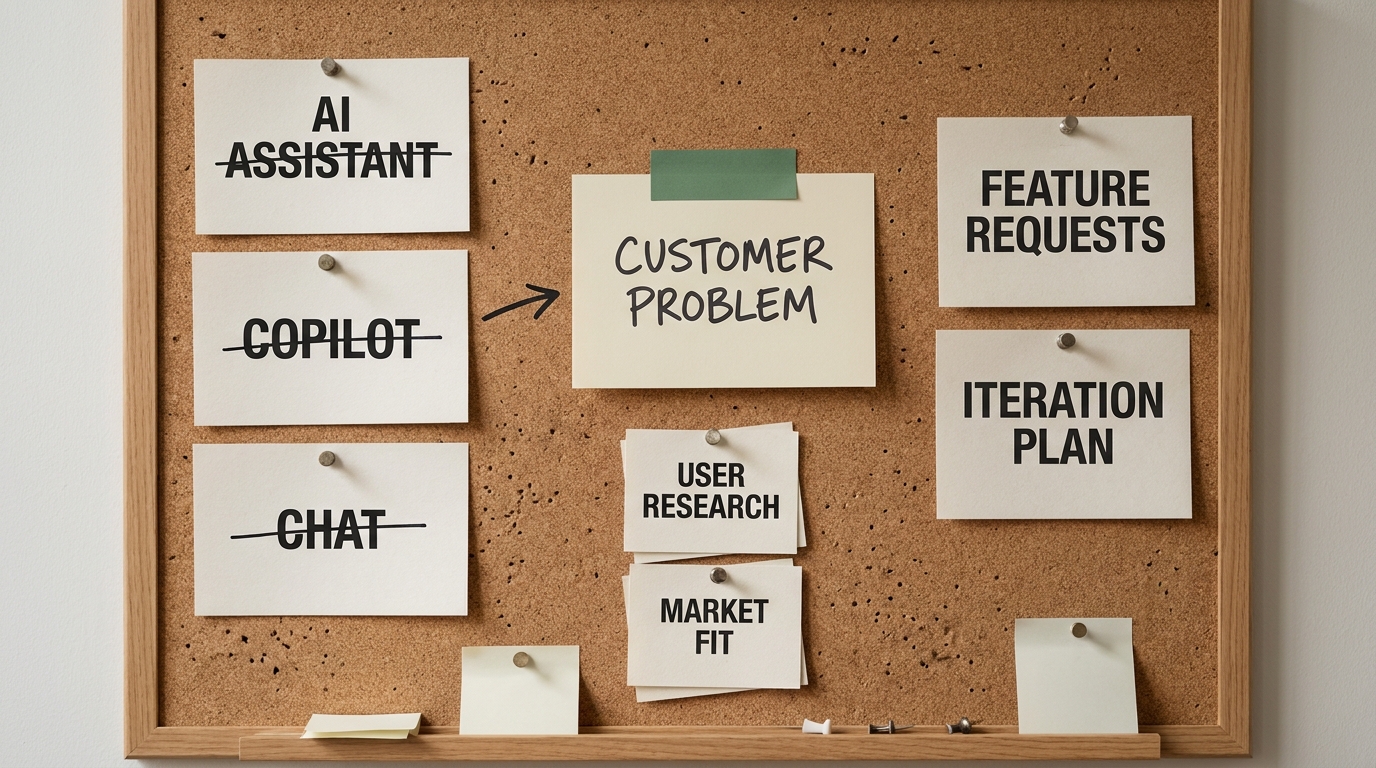

Two companies can both say they hired a generative AI consultant and mean completely different things. One walked away with a forty-slide strategy deck, a maturity assessment, and a follow-up proposal for phase two. The other walked away with a retrieval system answering customer questions in production , a governance layer their security team signed off on, and three of their own engineers who now know how to extend the thing without calling anyone. Same job title on the invoice. Opposite outcomes.
That gap is the whole problem with the phrase "generative AI consulting." It now covers everything from a one-week advisory workshop to a multi-month embedded build, and nobody has bothered to tell buyers which one they are actually getting. So a decision-maker who already ran a pilot, watched it stall, and now wants outside help is left guessing. What is the work? What should it produce? And are the firms ranking for the term even the right shape for the job?
Here is a plain-English answer to all three: what generative AI consulting actually is, what a real engagement produces, why so many pilots never make it past the demo, and how to choose a partner without burning another two quarters. No sales pitch dressed up as a framework. Where there is a genuine choice to make, including whether you need a large firm at all, this lays out the trade-off honestly.
Quick answer: Generative AI consulting is outside help that takes an organization from "we tried ChatGPT" to production-grade generative AI systems. It covers three things: strategy (deciding where AI actually pays off), build (working applications and agents running on your own data), and enablement (upskilling your team and putting guardrails in place). Engagements range from a one-week roadmap to multi-month embedded builds, and the good ones leave you with a running system and a team that can operate it, not just a document.
What generative AI consulting actually is
Generative AI consulting is the work of getting a specific organization from experimentation to dependable, in-production use of generative AI. The "generative" part carries weight. General AI consulting has been around for years, and it usually centers on predictive models, dashboards, and data pipelines. Generative AI (GenAI) consulting is about large language models (LLMs) and the systems built on top of them: assistants, retrieval-augmented generation (RAG) tools that ground a model in your own documents, and agentic systems that take multi-step actions rather than just answer a question.
It is also not the same as buying a tool. Adopting an off-the-shelf product like a coding assistant or a customer-support copilot is a procurement decision. Consulting is the harder work: figuring out which problems are worth solving with GenAI in your context, building the systems that solve them on your data and inside your workflows, and making sure your people can run them after the consultants leave.
A real engagement covers three areas. Skip any one of them and that is usually where the disappointment comes from.
- Strategy. Choosing the use cases that are worth the effort, sizing the likely return, and judging whether your data and processes are ready. This is where a good partner says no to the flashy demo idea and yes to the unglamorous workflow that quietly costs you a fortune.
- Build. The actual engineering: RAG systems, agents, model selection and the occasional fine-tune, and integration with the data and tools your team already uses. This is the part that separates consultants who ship from consultants who advise.
- Enablement. Upskilling your internal team so they can extend and maintain the system, plus the governance and responsible-AI guardrails that keep it safe to run. Enablement is what stops the engagement from turning into a dependency.
Hold those three words: strategy, build, enablement. A workshop that only does strategy leaves you with a plan and no system. A vendor that only does build leaves you with a system nobody internally understands. The combination is what "consulting" is supposed to mean here. So what happens when one of the three goes missing? That is the next section.
Why most generative AI pilots stall before production
Plenty of organizations have a generative AI pilot that wowed everyone in a meeting and then quietly went nowhere. Industry researchers keep documenting the same arc: a burst of enthusiasm at the pilot stage, then very little of it reaching production or measurable value. BCG's research on how companies create and destroy value with the technology and McKinsey's work on moving past the "honeymoon phase" both land on the same uncomfortable point. Getting a model to do something clever in a demo is easy. Getting it to do something valuable in production is a different and much harder job.

The failures are not mysterious. They fall into a handful of repeatable modes, and each one has a clear "what good looks like instead."
- Use cases chosen for demo appeal, not business value. The pilot was picked because it looked impressive, not because it relieves a real bottleneck. What good looks like: use cases chosen by working backward from a measurable cost or revenue lever, with a rough return sized before anyone writes code.
- No data foundation, so the real advantage is left on the table. The pilot runs on generic public knowledge while the organization's actual edge, its proprietary data, sits untouched. IBM has argued repeatedly that proprietary data is the durable competitive edge in generative AI . What good looks like: the system is grounded in your own documents, tickets, code, or records from day one.
- The pilot team disbands and nothing is operationalized. A temporary squad builds a promising prototype, everyone returns to their day jobs, and the prototype rots. What good looks like: the build is owned by named people, deployed to real infrastructure, and handed over with documentation and training.
- No guardrails, so security or compliance kills it at the gate. The prototype never planned for data-handling, access control, or auditability, so it cannot pass review. What good looks like: governance and responsible-AI guardrails are designed in from the start, not bolted on under pressure.
- The honeymoon problem: enthusiasm without rewiring the work. Leadership is excited, but the underlying workflow never actually changes, so the tool sits beside the old process instead of replacing it. What good looks like: the engagement changes how the work gets done, not just which software is open during it.
Notice what is missing from that list: the model. Not one of these is a model problem. The models are good enough. The failures are about selection, data, ownership, governance, and workflow, which is exactly the territory consulting is supposed to cover. A partner who only fine-tunes prompts and never touches your data foundation or your operating process is selling you the easy 20 percent of the job.
If you recognize your own stalled pilot somewhere in that list, the most useful next move is an honest read on which failure mode you hit and whether your data and processes are ready for another go. A short, structured readiness check costs far less than another failed quarter. Get an AI Readiness Snapshot , a focused conversation that maps your situation against these failure modes before you commit to a build.
What a good engagement produces
The clearest way to judge a generative AI consulting partner is to ask what you will be holding at the end . Abstract promises about "transformation" come cheap. Concrete deliverables do not, which is why most competitor pages avoid naming them. A good engagement should produce four things.

- A prioritized use-case roadmap. Not a list of everything possible, but a ranked short list of where GenAI pays off for you, with the reasoning and the rough return for each. This is the artifact that survives even when priorities shift.
- At least one working system in production. A running application or agent that real users or staff actually use, grounded in your data, integrated with your tools. One shipped system beats ten slides describing systems that could exist.
- An upskilled internal team. People on your side who understand how the system works and can extend it. The test of a good partner is whether your dependence on them falls over the engagement, not climbs.
- A governance and guardrail layer. The access controls, evaluation practices, data-handling rules, and responsible-AI checks that let the system run in a regulated, security-conscious environment without becoming a liability.
Picture the before and after. Before the engagement, a support team answers repetitive questions by hand, knowledge is scattered across wikis and inboxes, and nobody trusts the one chatbot experiment from last year. After a good engagement, the same team has a retrieval assistant grounded in the real knowledge base, the people running it can adjust it, and there is a clear record of what it is and is not allowed to do.
The use cases that tend to deliver are unglamorous and specific. Software teams use generative AI across the development lifecycle, a theme Thoughtworks has written about in depth , where the value reaches well beyond code completion into testing, legacy modernization, and documentation. Operations-heavy functions use it to compress manual workloads. Cognizant, for instance, has described applying generative AI to reimagine healthcare operations . Customer support is the common starting point because the data is rich and the payback is easy to measure. Across all of them the pattern holds: pick one workflow where the data is good and the cost is real, ship a system into it, and expand from a win rather than a slide.
Two ways to buy generative AI consulting
The first page of search results for this term is almost entirely global systems integrators and the big strategy firms. That seeds a quiet assumption that buying generative AI consulting means hiring one of them. It does not. There are two genuinely different models, and the right one depends on what you are trying to accomplish.
The global firm model. Large consultancies and systems integrators run broad, brand-safe, board-level programs. They are strong when the work is genuinely enterprise-wide transformation, when you need political cover for a large change, and when the budget and timeline can absorb a big, multi-workstream engagement.
- Best for: board-level transformation programs, multi-region rollouts, situations where the name on the deck carries internal weight, organizations that need a very large bench.
- Not for: getting one valuable system into production quickly, tight budgets, mid-market teams that want hands-on building rather than a program office, situations where speed and knowledge transfer matter more than breadth.
The embedded, fractional model. A small senior team builds alongside your people rather than presenting to them. The goal is to get one thing into production, transfer the skills to do the next thing, and leave your team more capable than they were. This is the fractional agentic team model: embedded, hands-on, and built around shipping and upskilling rather than reporting.
- Best for: mid-market and enterprise teams that want a working system fast, organizations closing an internal talent gap, buyers who care that their own people can run the result, anyone who wants build over slideware.
- Not for: purely advisory mandates with no appetite to build, organizations that specifically need a global brand's name for political reasons, the very largest multi-year transformation programs.
Neither model is wrong. They solve different problems. The expensive mistake is paying for a transformation program when what you actually needed was a small team to ship one production system and teach your people how it works. The reverse happens too, just less often: hiring a lean embedded team for a job that genuinely required a thousand-person global rollout. Be honest about which problem you have before you read a single proposal.
How to choose a generative AI consulting partner
Once you know which model fits, the choice comes down to a short set of questions that cut through the positioning. The competitor pages do not hand buyers this test, which is exactly why it is worth having. Ask every prospective partner the following, and weigh the answers.
- Do they ship production systems, or just strategy? Ask for a concrete example of something they built that is running in production, and what it does. Vague answers here are the most important red flag.
- Who owns the IP and the running system after they leave? You want clear ownership of the code, the system, and the data. If the answer leaves you permanently dependent on the vendor, that is a cost that compounds.
- How do they handle your data and security? A credible partner has a clear, specific answer about data handling, access, and governance before you even ask. A vague answer means it was an afterthought, which is how pilots die at the compliance gate.
- Do they upskill your team, or create dependency? The right partner wants your people able to run and extend the system. Ask plainly how knowledge transfer works and what your team will be able to do unaided afterward.
- What does the first thirty days produce? A good partner can describe a concrete early deliverable. If the first month is all discovery with nothing to show, the rest of the engagement will likely move at the same pace.
The red flags are the mirror image of those answers: deliverables that are pure slideware, no production track record, evasiveness about data handling, and a model that quietly keeps you dependent. Hear three of those, keep looking. When you have a shortlist and want to pressure-test it against a real scope, book a Discovery Sprint , a short, paid engagement that produces a prioritized roadmap and a clear first build, so you are choosing on evidence rather than a pitch.
What an engagement looks like in practice
It helps to see the realistic arc, with honest ranges instead of false precision. A typical embedded engagement moves through four phases, and the timeline hangs heavily on the state of your data and the complexity of the workflow.

- Readiness audit (days, not weeks). A lightweight assessment of your data, your candidate use cases, and the failure modes you are most exposed to. The output is a clear go or no-go and a sharpened target.
- Discovery and roadmap (one to a few weeks). A scoped plan: the prioritized use cases, the first system to build, the data it needs, the governance it requires, and the rough return. This is where strategy turns into a buildable spec.
- Build sprint (weeks to a few months). Engineering the first production system, grounded in your data and integrated with your tools, with guardrails built in rather than bolted on. The aim is one system live, not a portfolio of half-finished experiments.
- Operate and upskill (ongoing, then handed over). Running the system, tuning it on real usage, and transferring the skills so your team can own it. A good partner is actively working themselves out of the critical path here.
Costs scale with that scope. A short readiness or roadmap engagement is a modest, well-bounded investment. A full embedded build that puts a real system into production and upskills a team runs larger, but it is sized to a defined outcome rather than an open-ended program. The point of honest ranges is simple: you should be able to map spend to a deliverable at every stage. If a partner cannot tell you roughly what a phase costs and what it produces, that vagueness is itself information.
Key takeaways
- Generative AI consulting is help getting from experimentation to production-grade systems, across strategy, build, and enablement. If a partner only does one of the three, you will feel the gap.
- The number one reason pilots stall is not the model. It is use cases picked for demo appeal, ungrounded data, disbanded teams, missing guardrails, and unchanged workflows. Each has a clear "what good looks like" fix.
- What good produces: a prioritized roadmap, at least one system in production, an upskilled internal team, and a governance layer. Ask what you will be holding at the end.
- Two models, one decision: a large firm for board-level transformation breadth, or an embedded fractional team for shipping one production system fast and upskilling your people. Match the model to the problem.
- The choose-a-partner test: do they ship production, who owns the result, how do they handle data, do they upskill or create dependency, and what does the first thirty days produce.
The organizations getting real value from generative AI are not the ones with the largest decks or the most ambitious transformation slides. They are the ones who picked a single valuable use case, shipped it to production, put guardrails around it, and left their own team able to do the next one. That is a smaller, more concrete ambition than the market usually sells, and it is the one that works. If that is the path you want, an embedded agentic team is built to walk it with you, starting from one shipped system rather than one more strategy document.