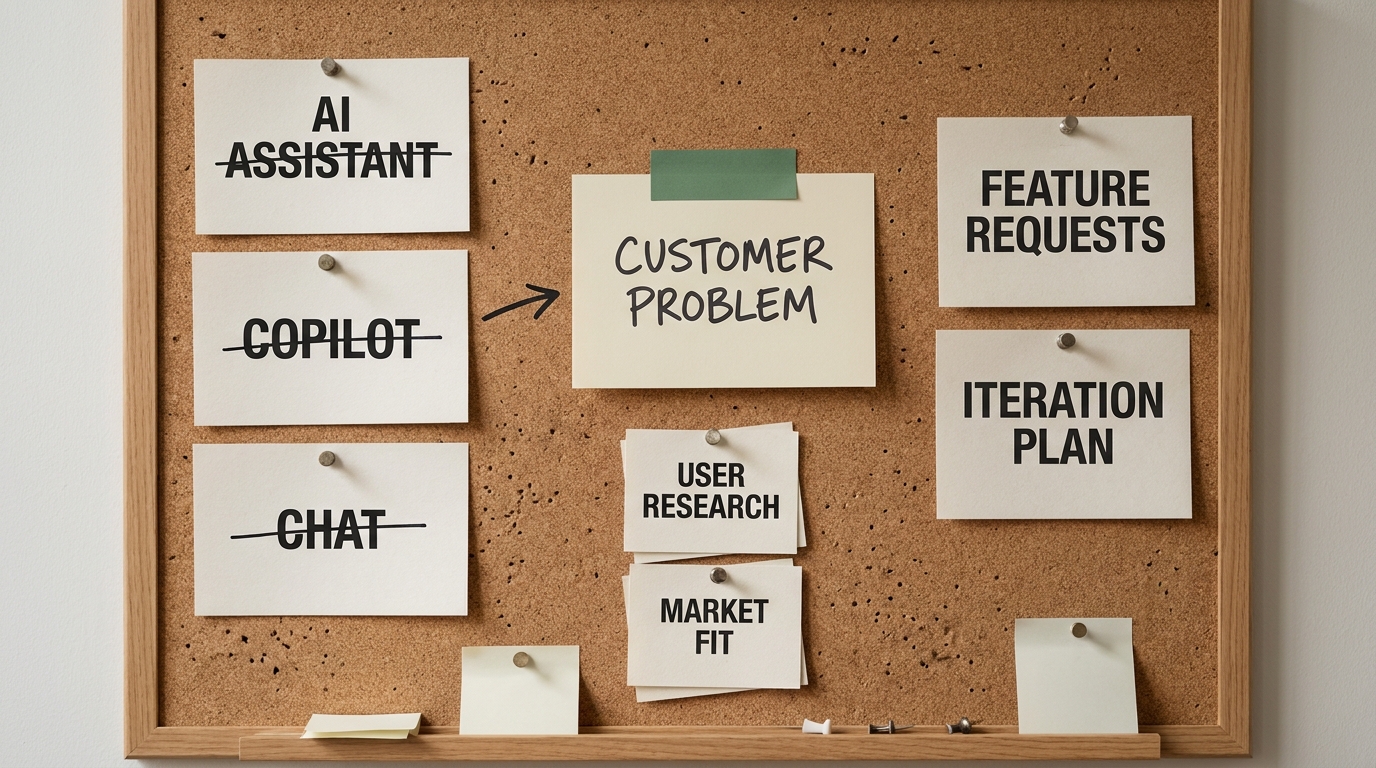

The hard part of an AI agent project is rarely the model. It is picking who builds the thing. Search "AI agent development companies" and you get a wall of near-identical rankings, every agency crowned number one on its own blog, and almost no way to tell a serious build partner from a thin wrapper around someone else's API.
This guide does two things the rest of the SERP skips. It gives you a vetted shortlist of companies worth your time, and it hands you the scorecard we used to rank them, so you can reweight the criteria for your own situation instead of trusting a stranger's ordering. Use the list to start. Use the scorecard to decide.
What an AI agent development company actually does
An AI agent development company designs, builds, integrates, and often operates autonomous software agents that complete multi-step work with minimal human prompting. That is a different job from the two categories people keep confusing it with, and the confusion is what burns budgets.
A no-code agent builder (Lindy, Relevance AI, and similar platforms) gives you the tooling to assemble simple agents yourself. A model vendor (OpenAI, Anthropic, Google) supplies the reasoning engine. A development company sits above both. It scopes the workflow, picks the models and tools, wires the agent into your CRM, data warehouse, and ticketing systems, handles guardrails and evaluation, and ships something that survives contact with production.
The work usually spans five areas. Discovery and use-case selection, so you automate a workflow that pays back. Architecture, including whether you need a single agent or a multi-agent system with an orchestrator. Integration, which is where most projects live or die , because an agent that cannot reach your systems of record is a demo, not a product. Governance, covering security, access control, audit trails, and human-in-the-loop checkpoints. And operate-and-maintain, because agents drift as your data and tools change, and a launch is the start of the work, not the end.
So when you read a company's page, sort its claims into those five buckets. The serious partners talk about integration and operations in concrete terms. The weaker ones spend the whole page on what large language models can do in the abstract. That single sort cuts your shortlist faster than any feature comparison.
Build, buy, or partner: decide before you shortlist
Before you compare a single vendor, decide whether you should hire one at all. There are three honest paths. The right one depends on your timeline, your in-house talent, and how core the agent is to your product. Pick wrong here and the best company on the list is still the wrong answer.
Buy a platform when the workflow is common and a configurable tool already covers it. Customer-support deflection, meeting scheduling, and simple lead routing are well served by off-the-shelf agent builders. You trade flexibility for speed, and for many teams that is the correct trade.
Build in-house when agentic capability is a durable competitive advantage you intend to own, and you already have machine-learning and platform engineers who can carry it. Building gives you full control and full responsibility, including the on-call pager when an agent misbehaves at 2 a.m.
Partner with a development company when the workflow is specific to your business, the integration surface is large, and you do not have a team you can pull off other work for two quarters. A good partner compresses the time from idea to production agent and leaves your team able to operate what they built.
If you are not sure where you stand, a short external read can save months. The AI Readiness Snapshot is a free 30-minute call that maps where agents would have the most immediate impact on your cost and reliability, before you commit a budget to any path.
How we scored these companies
Every ranking on this topic asserts an order and never shows its work. Here is ours, in the open. We scored each company against six criteria, weighted evenly by default. Reweight them for your context: a regulated enterprise should push security and governance to the top , while a fast-moving startup might value speed and engagement flexibility more.
- Production track record. Has the company shipped agents that run in production for real customers, not just demos and pilots? Look for named platforms, public case studies, and longevity.
- Integration and orchestration depth. Can they connect agents to your real systems and coordinate multiple agents with tool use and shared state? This is the single best predictor of whether a project reaches production.
- Domain and vertical fit. Do they understand your industry's data, workflows, and constraints, or will you pay for their learning curve?
- Security, compliance, and governance. Do they have a concrete story for access control, data handling, auditability, and the certifications your buyers or regulators require?
- Operate and maintain capability. Will they own the agent after launch, monitor it, and adapt it as your tools and data shift, or do they hand you a repo and walk away?
- Pricing transparency and engagement model. Is it clear how they charge, and does the model (fixed project, retainer, embedded team) match how you want to work?
Use the table below to scan the field, then read the entries for the companies that fit your scenario.
The best AI agent development companies at a glance
| Company | Best for | Engagement model | Notable strength | Pricing signal |
|---|---|---|---|---|
| LeewayHertz | Enterprises wanting end-to-end custom agents | Agency build | Broad full-stack AI delivery | Varies / contact |
| N-iX | Large-scale, regulated enterprise programs | Agency / staff augmentation | Engineering depth and compliance maturity | Varies / contact |
| EffectiveSoft | Mid-market custom builds | Agency build | Practical delivery across industries | Varies / contact |
| Intuz | Business-automation agents | Agency build | Workflow and integration focus | Varies / contact |
| Moveworks | Enterprise IT and employee-support agents | Platform + services | Mature support automation | Enterprise / contact |
| Lindy | Teams wanting no-code agents fast | Self-serve platform | Speed to a working agent | Public tiers |
| Relevance AI | Multi-agent orchestration | Self-serve platform | Agent teams and workflows | Public tiers |
| Intellectyx | Data-heavy enterprise agents | Agency build | Data and analytics heritage | Varies / contact |
| DevCom | SMB to mid-market custom builds | Agency build | Flexible delivery | Varies / contact |
| Deviniti | Enterprise software and workflow agents | Agency build | Atlassian and enterprise tooling depth | Varies / contact |
| Webority | Custom agents for smaller budgets | Agency build | Cost-efficient delivery | Varies / contact |
| Fractional partner (e.g. embedded team) | Closing the talent gap without hires | Embedded fractional team | Strategy plus build plus operate on demand | From a monthly retainer |
The 12 AI agent development companies, scored
Entries are ordered by overall fit for a typical buyer comparing a custom build, not alphabetically. Each follows the same template so you can compare like for like. Pricing reflects public information only. Where a company does not publish rates, treat the figure as "varies" and ask directly.
1. LeewayHertz
A long-running AI and blockchain development firm that has leaned hard into agentic and generative AI delivery. Known for taking enterprise projects end to end, from use-case discovery through deployment.
- Best for: enterprises that want one partner to own the full custom build.
- Not for: teams that just need to configure an off-the-shelf agent.
- Strengths: broad full-stack capability, established delivery process, wide industry coverage.
- Limitations: breadth can mean less specialization in any single vertical, so probe their depth in yours.
- Engagement model: agency build, typically fixed-scope projects.
- Pricing signal: varies, contact for quote.
2. N-iX
A large software engineering company with a deep bench and a strong presence in regulated industries such as finance and healthcare. Their AI agent practice benefits from mature engineering and security processes built over years of enterprise delivery.
- Best for: large, compliance-heavy programs that need scale and process.
- Not for: a quick, low-budget proof of concept.
- Strengths: engineering depth, compliance maturity, ability to staff big programs.
- Limitations: enterprise process can feel heavy for a small, fast experiment.
- Engagement model: agency build and staff augmentation.
- Pricing signal: varies, contact for quote.
3. EffectiveSoft
A custom software firm with a pragmatic, delivery-first reputation and a growing AI agent service line. A reasonable fit for mid-market companies that want a custom build without enterprise-scale overhead.
- Best for: mid-market custom agents tied to specific workflows.
- Not for: buyers who need a self-serve platform.
- Strengths: practical delivery, sensible scoping, multi-industry experience.
- Limitations: less brand visibility than the largest agencies, so lean on references.
- Engagement model: agency build.
- Pricing signal: varies, contact for quote.
4. Intuz
A development company positioning around AI agents for business automation, with an emphasis on connecting agents to the tools a business already runs. A fit when the goal is operational efficiency rather than a flagship product feature.
- Best for: automating internal business workflows.
- Not for: deeply specialized, research-grade agent work.
- Strengths: workflow and integration focus, business-automation framing.
- Limitations: validate depth on complex multi-agent orchestration.
- Engagement model: agency build.
- Pricing signal: varies, contact for quote.
5. Moveworks
Better known as a platform than a pure development shop, Moveworks has long automated enterprise IT and employee support with conversational AI, and has extended into agentic capabilities. A strong option when your use case is squarely employee support.
- Best for: enterprise IT, HR, and internal support automation.
- Not for: bespoke, customer-facing agents far from its core.
- Strengths: mature support automation, large enterprise deployments.
- Limitations: platform-led, so it shines inside its domain more than as a blank-canvas builder.
- Engagement model: platform plus implementation services.
- Pricing signal: enterprise, contact for quote.
6. Lindy
A no-code platform for building AI agents that handle business tasks like email, scheduling, and CRM updates. Not a custom development agency, but the fastest route to a working agent for many teams, and worth including because "build it yourself quickly" is a real alternative to hiring.
- Best for: teams that want a usable agent this week without engineering.
- Not for: complex, deeply integrated custom systems.
- Strengths: speed, approachable interface, large template library.
- Limitations: less suited to bespoke logic and heavy custom integration.
- Engagement model: self-serve platform.
- Pricing signal: public tiers.
7. Relevance AI
A platform focused on building and orchestrating teams of AI agents, with strong appeal when you need multiple agents coordinating rather than a single assistant . Sits between buy and build, since you assemble agents yourself but on capable infrastructure.
- Best for: multi-agent workflows and orchestration.
- Not for: buyers who want a vendor to do the whole build for them.
- Strengths: multi-agent design, workflow tooling, faster than building from scratch.
- Limitations: you still own the assembly and the operations.
- Engagement model: self-serve platform.
- Pricing signal: public tiers.
8. Intellectyx
A data, analytics, and AI company that brings a data-engineering heritage to agent work. A sensible pick when your agents depend on messy enterprise data that has to be unified before any automation is trustworthy.
- Best for: data-heavy agents where the hard part is the data layer.
- Not for: simple, low-integration assistants.
- Strengths: data and analytics depth, enterprise integration experience.
- Limitations: confirm specific agentic project references, not just analytics work.
- Engagement model: agency build.
- Pricing signal: varies, contact for quote.
9. DevCom
A custom software development company with a flexible delivery model that scales from SMB to mid-market. A reasonable generalist partner for a first custom agent when you value adaptability and cost control.
- Best for: SMB and mid-market first builds.
- Not for: the most demanding enterprise-scale, regulated programs.
- Strengths: flexible delivery, broad development capability.
- Limitations: as a generalist, push for evidence of production agent work specifically.
- Engagement model: agency build.
- Pricing signal: varies, contact for quote.
10. Deviniti
An established enterprise software and consulting firm with deep roots in Atlassian and enterprise tooling, now offering AI agent development. A fit when your agents need to live inside complex enterprise software ecosystems.
- Best for: agents embedded in enterprise software and IT workflows.
- Not for: consumer-facing, lightweight assistants.
- Strengths: enterprise tooling depth, consulting experience.
- Limitations: strongest inside its enterprise-software comfort zone.
- Engagement model: agency build and consulting.
- Pricing signal: varies, contact for quote.
11. Webority
A development company offering custom AI agent services with an emphasis on cost-efficient delivery. Worth a look when budget is the binding constraint and you still want a custom build rather than a template.
- Best for: smaller budgets that still need custom work.
- Not for: large, mission-critical enterprise programs.
- Strengths: cost efficiency, willingness to take on smaller projects.
- Limitations: vet production maturity and operate-and-maintain support carefully.
- Engagement model: agency build.
- Pricing signal: varies, contact for quote.
12. A fractional agentic team
The newest model on this list is not a traditional agency at all. A fractional agentic team embeds strategy, build, and operate roles into your organization on demand, so you get senior agentic capability without permanent hires. It is built for the exact problem most buyers have: a real workflow to automate and no spare team to do it.
- Best for: closing the AI talent gap while keeping ownership in-house.
- Not for: a one-off, fixed-scope deliverable you never intend to maintain.
- Strengths: combines strategy, engineering, and operations, scales up and down, transfers knowledge to your team.
- Limitations: an ongoing engagement, so it suits continuous work more than a single drop.
- Engagement model: embedded fractional team on a monthly retainer.
- Pricing signal: from a monthly retainer. See the Fractional Agentic Team for how the model works.
How to choose for your situation
The shortlist matters less than matching a company to your specific constraints. Find yourself in one of these four scenarios.
You are an SMB automating one workflow. Start by checking whether a platform like Lindy or Relevance AI already covers it. If the workflow is truly custom, a flexible agency such as DevCom, Webority, or EffectiveSoft can build it without enterprise overhead.
You are an enterprise in a regulated industry. Weight security, compliance, and operate-and-maintain heavily. N-iX, Deviniti, and Intellectyx bring the process and data maturity these programs need, and you should expect a real governance conversation early.
Your hard problem is data. When agents depend on fragmented systems of record, a data-first partner like Intellectyx, or any company that leads with integration rather than model talk, will save you from a smart agent that cannot see your business.
You need capability, not just a deliverable. If the goal is to build agentic muscle your team keeps, a fractional model beats a fixed project, because it leaves knowledge and operating capacity behind rather than a repo nobody owns.
Once you have a shortlist of two or three, a structured discovery removes the guesswork. The AI Transformation Discovery is a one-week sprint that produces a concrete roadmap, so you scope the project on evidence rather than a sales deck.
What an AI agent project typically costs and how long it takes
Pricing on this topic is deliberately opaque, so set expectations from the engagement shape rather than a published rate card. Platform tools (Lindy, Relevance AI) start low, often a monthly subscription, because you do the assembly. Custom agency builds are quoted per project and scale with integration complexity, not model choice. A narrow single-agent automation is a smaller engagement than a multi-agent system wired into several systems of record. Embedded and fractional models run as a monthly retainer, trading a fixed deliverable for ongoing capacity.
On timeline, a focused proof of concept can land in a few weeks, while a production-grade agent integrated into core systems, with governance and monitoring, is usually a multi-month effort. Be skeptical of anyone promising a complex, integrated, compliant agent in days. The demo is fast. Production is not.
Whatever the model, ask the vendor to break a quote into discovery, build, integration, and operate. A partner who cannot separate those is either inexperienced or hiding where the cost really sits.
Red flags and due-diligence questions
The fastest way to shorten a shortlist is to look for the warning signs that separate a build partner from a reseller .

- No production references. Demos and pilots are easy. Ask for agents running in production today, and for how long.
- All model talk, no integration story. If the conversation never reaches your systems of record, the agent will not either.
- No security or governance plan. A serious partner raises access control, data handling, and auditability before you have to.
- No operate-and-maintain offer. An agent that ships and is never tended drifts into uselessness. Find out who owns it after launch.
- It ranks itself number one on its own list. Treat self-crowning rankings as marketing, not evidence.
Bring these questions to every vendor call: Which agents have you put into production, and can I speak to that client? How do you handle our data, access control, and audit trail? Who operates and updates the agent after launch, and at what cost? How do you measure whether an agent is working? What happens when the underlying model or our tools change?
The answers separate the companies that will still be useful in a year from the ones that will hand you a stalled project.
Key takeaways
- The shortlist is a starting point. The scorecard, six criteria you reweight for your situation, is what actually picks the right partner.
- Decide build, buy, or partner before you compare vendors, because the best company is the wrong choice if you should have bought a platform or built in-house.
- Integration and operate-and-maintain are the criteria that predict production success, far more than which model a company uses.
- Demand production references, a security story, and a clear post-launch ownership plan from every vendor, and discount anyone who ranks itself first.
- When the real constraint is talent and capacity rather than a single deliverable, a fractional agentic team closes the gap while keeping ownership in-house. Start with a free AI Readiness Snapshot to see where agents pay back first.